
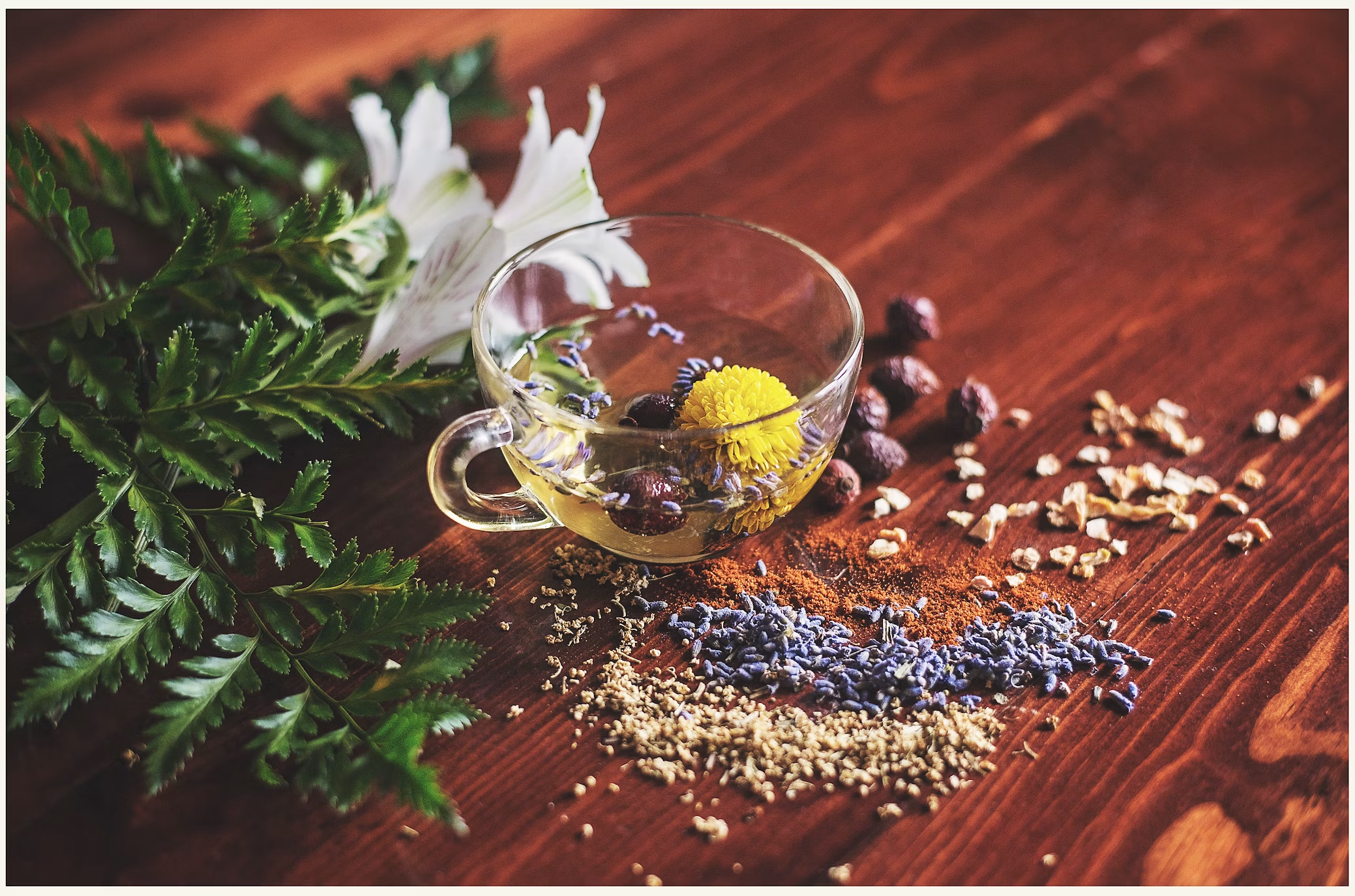
In a world of wearable health trackers and optimised biohacking stacks, there is growing interest in something much older.
Ayurveda — meaning the science of life in Sanskrit — is one of the world’s oldest holistic health systems, originating in India over 5,000 years ago. It was codified in ancient texts like the Charaka Samhita and Sushruta Samhita and has been practiced continuously ever since.
Today, researchers at institutions including Harvard, Johns Hopkins, and AIIMS are studying Ayurvedic principles and finding remarkable alignment with modern understandings of circadian biology, gut microbiome health, and psychoneuroimmunology.
This is a beginner’s guide — practical, not overwhelming, and designed to give you what you can actually use today.
The Core Philosophy: Prevention Over Cure
Where modern medicine primarily treats disease, Ayurveda’s primary focus is the prevention of imbalance and the maintenance of optimal health through aligned living. The fundamental premise: each person has a unique constitutional type, and health is the state of living in alignment with that constitution and with nature’s rhythms. Disease arises when we consistently act against our nature or against natural cycles.
This isn’t at odds with modern medicine — it’s complementary to it. Ayurveda excels in the prevention and management of lifestyle-related conditions: stress, poor digestion, sleep disruption, low energy, and chronic inflammation.
The Three Doshas: Understanding Your Constitution
Ayurveda identifies three fundamental biological energies called doshas — Vata, Pitta, and Kapha. Each person has a unique combination of all three, with one or two typically dominant.
Vata (Air + Space)
Qualities: light, dry, cold, mobile, irregular. In balance: creative, energetic, enthusiastic, adaptable. Out of balance: anxious, scattered, unable to focus, irregular sleep and digestion. Common Vata types tend toward a lean build, quick mind, and a tendency toward worry.
Pitta (Fire + Water)
Qualities: hot, sharp, intense, oily, mobile. In balance: focused, intelligent, driven, good digestion. Out of balance: irritable, competitive, inflammatory conditions, perfectionism that tips into stress. Common Pitta types tend toward a medium build, strong digestion, and a tendency toward intensity.
Kapha (Earth + Water)
Qualities: heavy, slow, stable, cool, smooth. In balance: calm, grounded, compassionate, excellent stamina. Out of balance: sluggish, resistant to change, prone to weight gain, congestion. Common Kapha types tend toward a larger build, slow metabolism, and a tendency toward stability and sometimes stagnation.
Most people are a combination — Vata-Pitta, Pitta-Kapha, and so on. Detailed dosha questionnaires are available online from reputable Ayurvedic institutions to help you identify your predominant type.
Dinacharya: The Ayurvedic Daily Routine
One of Ayurveda’s most practical and immediately applicable teachings is dinacharya — the daily routine aligned with the cycles of nature.
Morning (Kapha time: 6–10am)
- Wake before sunrise if possible
- Drink warm water with lemon upon rising
- Tongue scraping — removes toxins accumulated overnight
- Oil pulling with sesame or coconut oil for 5–10 minutes
- Abhyanga — self-massage with warm oil before showering
- Yoga and pranayama
- Eat the largest meal of the day at midday when digestive fire is strongest
Afternoon (Pitta time: 10am–2pm)
- Peak productivity and focused work
- Avoid skipping meals during this window
- A short walk after lunch aids digestion
Evening (Vata time: 2–6pm)
- Energy naturally fluctuates — good time for creative work
- Eat a light dinner before 7pm
- Avoid heavy food in the evening — weakens overnight digestion
Night (Kapha time: 6–10pm)
- Wind down, dim lights, reduce stimulation
- Warm milk with turmeric — golden milk — before bed if desired
- Sleep by 10pm — Ayurveda identifies 10pm–2am as the body’s natural repair cycle
5 Simple Ayurvedic Practices to Start Today
1. Tongue Scraping Every Morning
Costs nothing, takes 30 seconds, and directly improves digestion and oral health. Use a copper or stainless steel tongue scraper — available at any pharmacy. Scrape gently from back to front 5–7 times before brushing your teeth.
2. Warm Water First Thing
Replaces the overnight fast with gentle hydration before anything else. A glass of warm water — with or without lemon — kickstarts digestion and supports natural detoxification processes.
3. Eat Mindfully
Ayurveda emphasises that how you eat is as important as what you eat. Sit down. Eat without screens. Chew thoroughly. Eat to about 75% fullness — leaving space for digestion. These simple practices dramatically improve how your body processes food.
4. Sleep and Wake at Consistent Times
Aligning your sleep schedule with natural cycles is one of Ayurveda’s core principles — and one of the most strongly supported by modern chronobiology research. Consistent timing is more important than total hours for circadian health.
5. Abhyanga — Self Oil Massage
Warm a small amount of sesame oil (Vata and Kapha) or coconut oil (Pitta) and massage your body before showering. Takes 5–10 minutes. Deeply calming for the nervous system, excellent for skin health, and one of the most nourishing self-care practices in Ayurveda.
Ayurvedic Herbs Worth Knowing
- Ashwagandha — adaptogenic, reduces cortisol, improves sleep and energy
- Tulsi (Holy Basil) — stress-reducing, immune-supporting, widely available in India
- Triphala — digestive tonic, gentle detoxifier, one of the most used formulas in Ayurveda
- Turmeric — anti-inflammatory, widely researched, best absorbed with black pepper and fat
- Brahmi — supports cognitive function, memory, and nervous system health
Always consult a qualified Ayurvedic practitioner or doctor before starting herbal supplements, especially if you are on medication.
Frequently Asked Questions
Is Ayurveda scientifically validated? Increasingly, yes. Several Ayurvedic principles — including circadian eating, adaptogenic herbs, gut health practices, and sleep timing — are well-supported by modern research. Some traditional practices require more rigorous study. Approach it as a complement to, not replacement for, evidence-based medicine.
Do I need to see an Ayurvedic practitioner? For serious health concerns, yes. For general wellness practices like dinacharya and dietary adjustments, beginning on your own with good resources is reasonable.
What’s the best way to find my dosha? Start with an online questionnaire from a reputable Ayurvedic institution. For accurate assessment, a consultation with a certified Ayurvedic practitioner is ideal.
Can Ayurveda help with modern lifestyle diseases? Research suggests Ayurvedic lifestyle practices are particularly effective for stress-related conditions, digestive issues, sleep disorders, and inflammatory conditions — all common modern lifestyle concerns.
Ancient Wisdom for a Modern Life
You don’t need to overhaul your life to benefit from Ayurveda. Start with one practice — tongue scraping, warm water in the morning, or a consistent bedtime. These small anchors, practiced daily, create the foundation of a more aligned way of living. Ayurveda is not about perfection. It is about returning — again and again — to what nourishes you. In a culture that profits from your disconnection from yourself, that returning is quietly radical.