Stress has become so normal that we’ve stopped noticing how much it’s costing us.
The tight chest. The mind that won’t quiet down at night. The exhaustion that sleep doesn’t fix. The short fuse. The feeling of constantly running behind life instead of living it.
Here’s what’s important to understand: stress is not just a feeling. It’s a physical state. When you’re chronically stressed, your body floods with cortisol, your immune system weakens, your digestion slows, and your brain’s decision-making centre actually shrinks over time.
The good news? Your nervous system is remarkably responsive. With the right inputs, it can shift from fight-or-flight to rest-and-recover relatively quickly. No medication required.
1. Slow Your Breath Down
This is the fastest stress relief tool available to you — and it works within minutes. When you’re stressed, your breathing becomes shallow and rapid, which signals danger to your nervous system and keeps the stress response active. Deliberately slowing your exhale activates the vagus nerve, triggering your body’s calm mode.
Try this: Inhale for 4 counts, hold for 4, exhale for 6–8 counts. Repeat for 3–5 minutes.
A 2017 study in Frontiers in Psychology found that slow breathing significantly reduces both stress and anxiety within minutes.
2. Move Your Body — But Not Aggressively
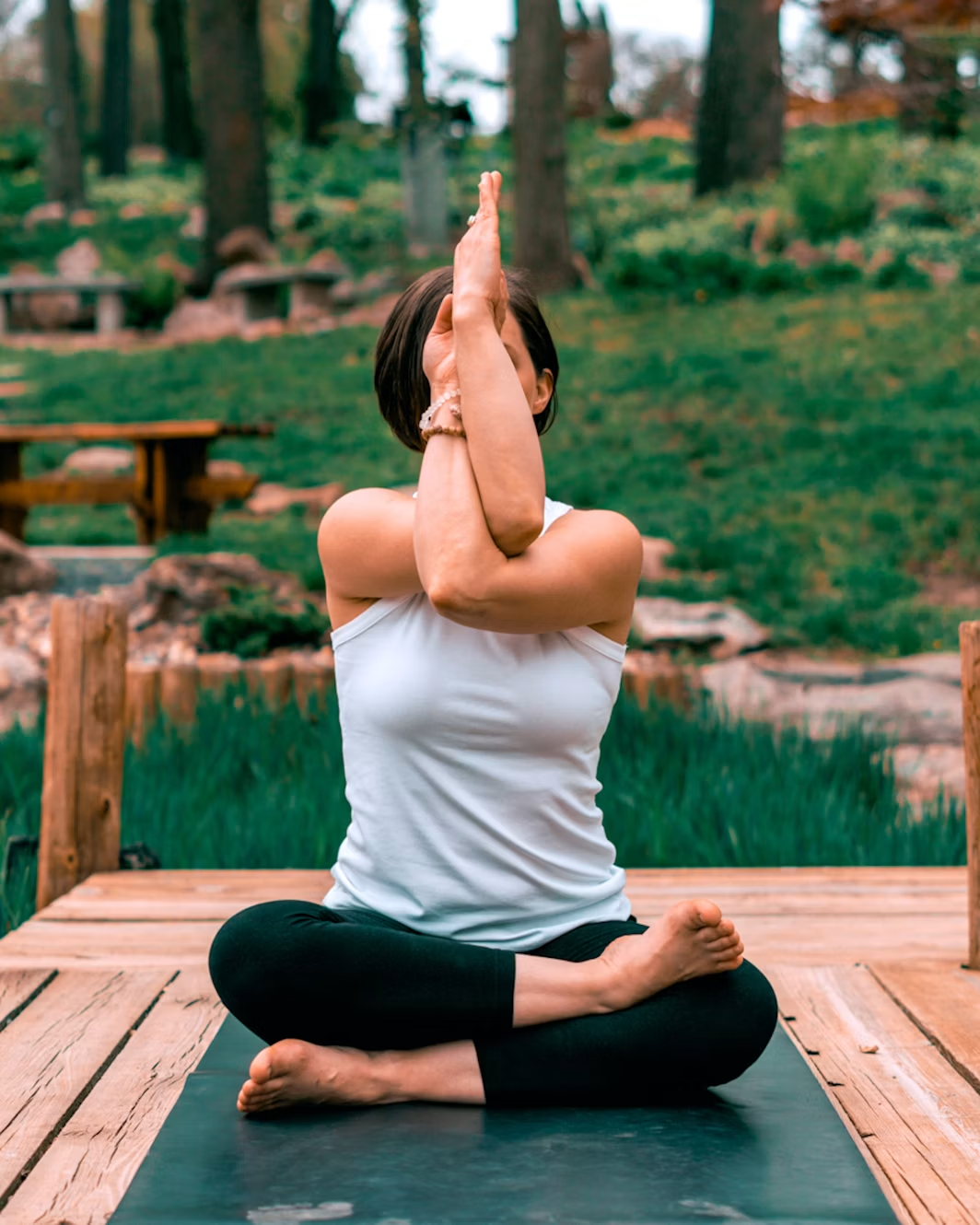
Exercise reduces stress hormones and releases endorphins, but the type of movement matters when you’re already depleted. High-intensity workouts when you’re chronically stressed can actually spike cortisol further. Research favours moderate movement: a 20–30 minute walk, gentle yoga, swimming, or cycling.
The minimum effective dose: A 20-minute walk in nature reduces cortisol by up to 21%, according to a 2019 study in Frontiers in Psychology.
3. Reduce Caffeine After 1pm
Caffeine directly stimulates cortisol production and delays sleep. If you’re already stressed, caffeine amplifies that physiological state. This doesn’t mean eliminate coffee — it means be intentional. Switch your afternoon coffee to green tea (lower caffeine, contains L-theanine which promotes calm) or herbal infusions.
4. Practice the 5-4-3-2-1 Grounding Technique
When stress turns into acute anxiety or overwhelm, this technique pulls your nervous system back to the present moment using your senses.
- 5 things you can see
- 4 things you can physically feel
- 3 things you can hear
- 2 things you can smell
- 1 thing you can taste
This interrupts the anxiety loop by redirecting attention to sensory reality rather than catastrophic thinking.
5. Spend Time in Nature
Japanese researchers coined the term Shinrin-yoku — forest bathing — after studies showed that simply being among trees measurably reduces cortisol, blood pressure, and heart rate. You don’t need a forest. A local park, a garden, or even sitting near a window with natural light has measurable calming effects.
6. Prioritise Genuine Connection
Loneliness and social isolation are among the strongest predictors of chronic stress. Human connection — even brief, genuine interaction — triggers the release of oxytocin, which directly counteracts cortisol.
Practical action: Schedule one meaningful conversation per day. Not a WhatsApp message — an actual voice or face-to-face conversation.
7. Write It Down — Especially at Night
Expressive writing — journaling your thoughts and feelings — has been shown in multiple studies to reduce cortisol and improve psychological wellbeing. Writing converts vague, swirling anxiety into concrete language, which allows your brain to process and contain the emotional experience rather than being overwhelmed by it.
Try this simple 3-question journal before bed:
- What stressed me today?
- What is in my control about this?
- What am I grateful for right now?
8. Limit News and Social Media
Much of our daily screen time is spent consuming content designed to trigger emotional reactions — including stress, outrage, and anxiety. You don’t have to disappear from the internet. Create intentional boundaries: no phone in the first 30 minutes after waking, no social media after 9pm, news checked once per day at a fixed time.
Research is consistent: lower screen time correlates directly with lower anxiety and better mood.
9. Try Ashwagandha
Ashwagandha is one of the most well-studied adaptogenic herbs in Ayurvedic medicine. A 2019 double-blind study found that 240mg of ashwagandha extract daily significantly reduced cortisol and self-reported stress compared to placebo. It’s widely available in India and generally well-tolerated. Consult a doctor before starting any supplement.
10. Create a Wind-Down Ritual
Stress compounds when the nervous system never fully deactivates. A consistent evening ritual — the same sequence of calming activities each night — teaches your body when to shift gears.
A simple wind-down ritual:
- Dim the lights after 9pm
- Make a calming herbal tea — chamomile, ashwagandha, or tulsi
- 10 minutes of light stretching or yoga
- 5 minutes of journaling
- Read a physical book
- Lights out at a consistent time
The Bigger Picture
Reducing stress isn’t about eliminating pressure from your life — some stress is necessary and even useful. It’s about building a nervous system that is resilient, regulated, and capable of returning to calm after activation. None of these practices requires significant time or money. They require intention and consistency. Start with one. Notice the difference. Build from there.
Frequently Asked Questions
How quickly can I reduce stress naturally? Some techniques like breathing and grounding work within minutes. Sustainable stress reduction through lifestyle changes takes 2–4 weeks of consistent practice.
Is chronic stress dangerous? Yes. Long-term elevated cortisol is linked to cardiovascular disease, impaired immunity, digestive disorders, depression, and cognitive decline.
Can food affect stress levels? Significantly. High-sugar diets spike and crash blood sugar, worsening anxiety. Omega-3 fatty acids, magnesium-rich foods, and fermented foods all support stress regulation.
When should I seek professional help? If stress is significantly affecting your sleep, relationships, or work performance, speaking with a mental health professional is the right step.
One Step Today
You don’t have to implement all ten at once. Choose one that resonates. Try it for seven days. Your nervous system will tell you what’s working.