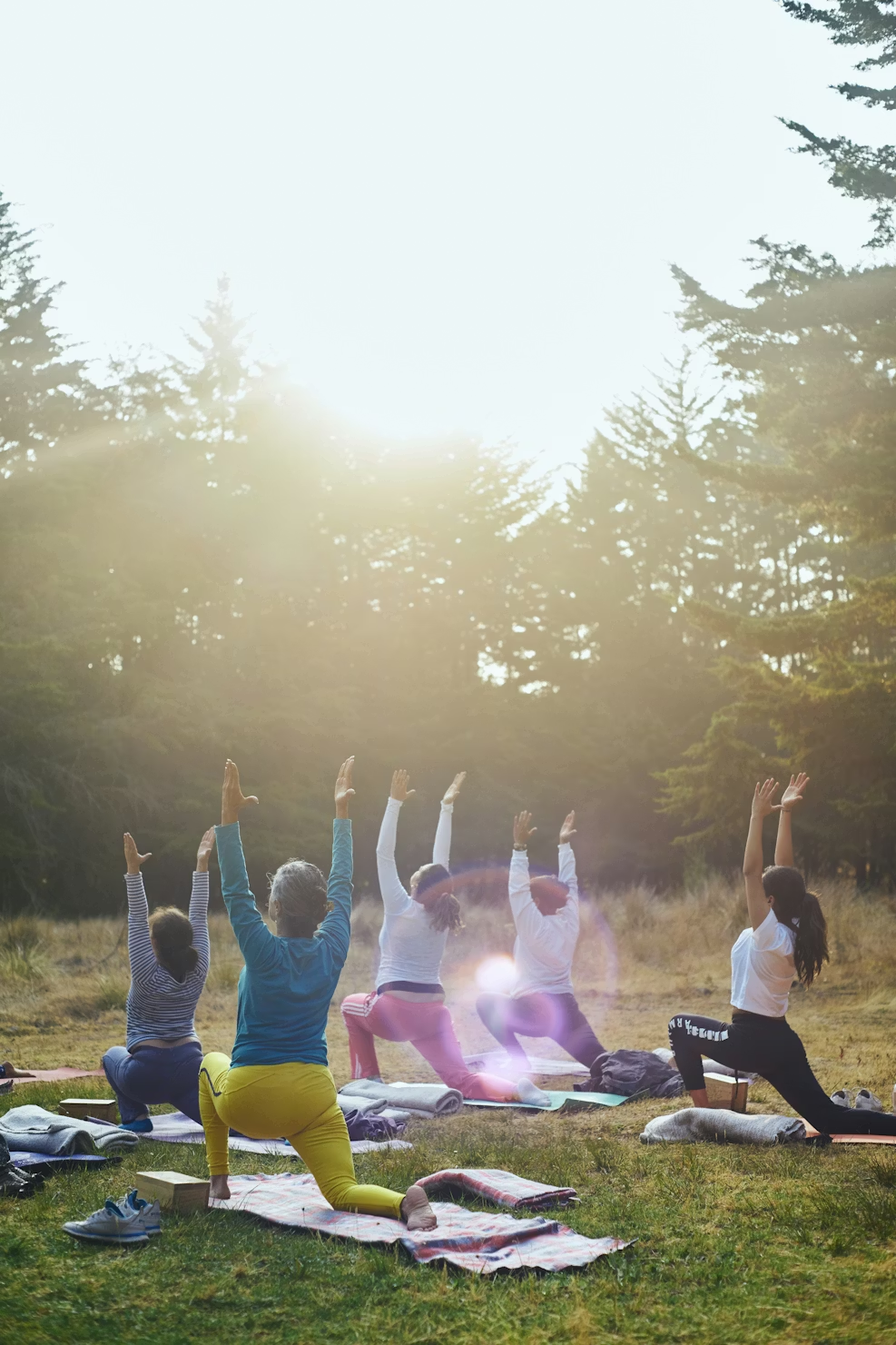
You’ve been thinking about starting yoga for a while now. Maybe you’ve seen someone move through poses on Instagram and thought — that looks peaceful. And also slightly impossible. Maybe your back aches, your sleep is off, or you just feel tight in a way that’s hard to explain. Or maybe you’re simply tired of feeling like your body is something you carry around, rather than something you actually live in.
Here’s the honest truth: yoga is one of the most accessible, well-researched, and genuinely life-changing practices you can build into your daily life. And you do not need a studio, an expensive mat, or a flexible body to begin.
What Is Yoga, Really?
Most people think of yoga as stretching. It’s actually a complete mind-body system developed in India thousands of years ago — and modern science has spent decades confirming what ancient practitioners already knew.
A 2018 review in the International Journal of Yoga found that regular practice reduces cortisol, improves sleep quality, reduces anxiety, and increases overall wellbeing. Research from Harvard Medical School links yoga to reduced activation of the sympathetic nervous system — meaning your body’s fight-or-flight response genuinely calms down over time.
Why Start at Home?
Beginning at a studio can feel intimidating. At home, you move at your own pace, you don’t compare yourself to anyone, and you can restart a pose three times without feeling self-conscious.
- Zero commute — your mat is wherever you are
- Complete flexibility in timing: morning, lunch, or before bed
- No performance pressure
- Free or very low cost
- You can pause, rewind, and take your time
What You Need (It’s Less Than You Think)
- A yoga mat — a basic non-slip mat is enough. A carpeted floor works fine for your first week.
- Comfortable clothing — anything you can move freely in
- A quiet corner — even a 2×6 foot space is sufficient
7 Best Yoga Poses for Beginners
1. Mountain Pose (Tadasana)
Stand tall, feet hip-width apart, arms at your sides. Feel your feet grounded. Breathe. This is the starting point for all standing poses.
2. Child’s Pose (Balasana)
Kneel, sit back on your heels, stretch your arms forward on the floor, and rest your forehead down. This is your safe place. Return here whenever you need a pause.
3. Cat-Cow (Marjaryasana-Bitilasana)
On all fours, alternate between arching your back upward (cat) and letting it dip downward (cow) as you breathe. Excellent for spinal mobility and releasing back tension.
4. Downward Facing Dog (Adho Mukha Svanasana)
From all fours, tuck your toes and lift your hips up and back into an inverted V. Keep a gentle bend in your knees. This pose stretches your entire back body.
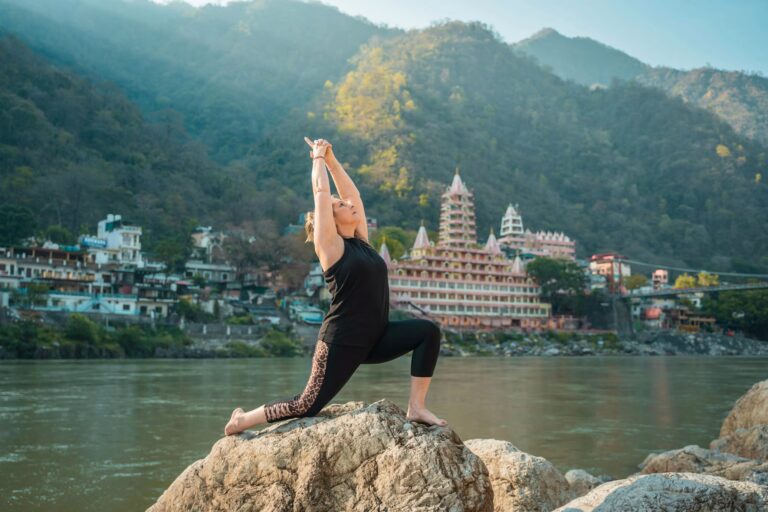
5. Warrior I (Virabhadrasana I)
Step one foot forward into a lunge, raise your arms overhead, and look forward. Builds strength in your legs and opens the chest.
6. Seated Forward Fold (Paschimottanasana)
Sit with legs extended. Inhale to lengthen your spine, exhale and fold forward gently. Don’t force it — let gravity do the work.
7. Legs Up the Wall (Viparita Karani)
Lie on your back and rest your legs up a wall. This gentle inversion calms the nervous system beautifully — especially before sleep.
Your First 15-Minute Beginner Routine
- Child’s Pose — 1 minute, slow deep breaths
- Cat-Cow — 1 minute, 10 gentle rounds
- Downward Dog — 5 breaths, then rest in Child’s Pose
- Warrior I right side — 5 breaths
- Warrior I left side — 5 breaths
- Seated Forward Fold — hold for 1 minute
- Legs Up the Wall — 2–3 minutes
- Savasana — 2 minutes, eyes closed, complete stillness
How Often Should Beginners Practice?
Consistency matters more than intensity. Ideal starting frequency: 3–4 times per week, 15–30 minutes per session. After 3–4 weeks, you can move toward daily practice if you feel ready.
Common Beginner Mistakes to Avoid
Forcing the stretch — Pain is not progress in yoga. Move to the edge of comfort, not beyond it.
Holding your breath — The breath is the practice. If you notice you’re holding it, slow everything down.
Skipping Savasana — This is when your nervous system integrates the session. It’s not laziness. It’s essential.
Comparing yourself — Your forward fold that reaches your shins is just as valid as someone else’s hands on the floor.
What the Science Says About Yoga and Mental Health
A 2021 meta-analysis in Frontiers in Psychiatry reviewed 19 studies and found yoga significantly reduces symptoms of anxiety and depression. Regular yoga has been shown to reduce cortisol levels by up to 30%, improve sleep quality, decrease anxiety symptoms, strengthen the parasympathetic nervous system, and improve self-compassion.
Frequently Asked Questions
Can I start yoga if I’m not flexible? Yes. Lack of flexibility is a reason to start yoga, not a reason to wait. Flexibility develops through practice.
What is the best time to practice yoga? Morning yoga energises your day. Evening yoga helps you unwind. The best time is whenever you’ll actually show up consistently.
How soon will I see results? Most beginners notice reduced tension and better sleep within 2–3 weeks. Visible physical changes appear after 6–8 weeks of consistent practice.
Start Your Sattva Living Journey
Starting yoga doesn’t require the perfect mat, the ideal body, or a studio membership. It requires a small pocket of time, a willingness to breathe, and the patience to show up — even imperfectly. Your practice starts today.